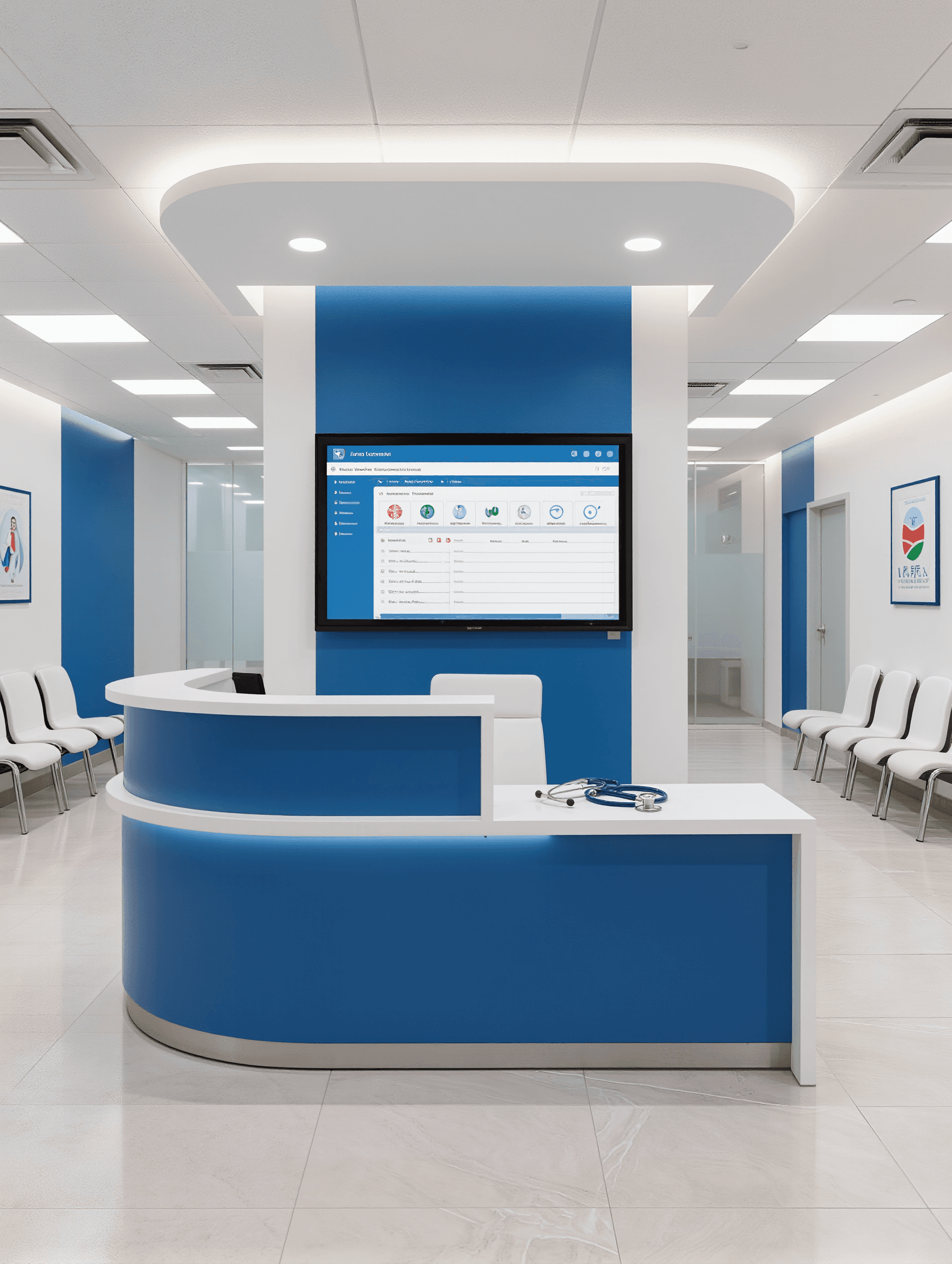
Every missed call at your medical clinic is a potentially missed patient — someone who needed care, didn't get through, and may book with the next clinic on Google. Across Cape Town and the wider South African market, after-hours and peak-hour gaps are the most common pattern: receptionists juggling walk-ins, billing queries, and a ringing phone all at once. The compounding impact across a typical week — and across after-hours, lunch breaks and weekends — adds up quickly.
This is not strictly a staffing problem. It is a systems problem. An AI receptionist for medical clinics in South Africa can answer enquiries around the clock, route urgent cases, and capture booking demand that would otherwise be lost.
In this guide, I'll walk through how missed calls leak into lost bookings, why traditional fixes hit limits in the SA market, and how clinics are layering AI receptionists onto their existing workflow to capture more patient enquiries.
Where the Bookings Leak: Missed-Call Patterns at SA Medical Clinics
Cape Town GP practices typically receive a high volume of calls each day. During peak hours — Monday mornings, lunch breaks, after-school hours — receptionists are juggling patients at the front desk, filing, and managing walk-ins. The phone rings. Nobody answers. The patient hangs up and calls the next clinic on Google.
The bookings most at risk tend to share a few patterns:
- After-hours enquiries: evenings, weekends, public holidays — when reception is closed but patients want to book the next available slot
- Lunch-hour and walk-in collisions: the receptionist is helping the person at the desk and can't pick up the phone
- Simultaneous calls: two or three patients calling at once — only one gets through
- Sick-leave / staff turnover gaps: coverage drops and missed-call rate spikes
- Routine enquiries that block urgent ones: repeat-script requests and directions tying up the line when an actual booking is waiting
Most SA clinics also lose lifetime value, not just the single missed booking. A patient who books with a competing practice typically stays there for routine care, follow-ups, and referrals — so each missed first call can compound into lost bookings down the line. Actual figures depend on your call volume, consultation mix, current answer rate, and patient catchment.
Why Traditional Solutions Fail South African Medical Clinics
Most clinic owners try to solve this problem by hiring more reception staff. But here is why that approach fails in South Africa:
Cost (industry estimate): A full-time receptionist in Cape Town typically costs in the region of R12,000 to R18,000 per month in salary alone (industry estimate; varies by experience, hours, and benefits), plus UIF contributions, leave pay, and training costs. And they still can't work 24 hours a day. A meaningful share of patient enquiries arrives outside business hours and goes unanswered without after-hours cover.
Capacity: Even the best receptionist can only handle one call at a time. During peak periods, multiple patients calling simultaneously means some go to voicemail. And in South Africa, patients rarely leave voicemails — they simply move on.
Consistency: Human receptionists have off days. They take leave. They get sick. Load shedding disrupts the phone system. Every gap in coverage is potentially lost bookings.
Answering services are another common fix, but they typically run at a recurring monthly cost (third-party SA call-centre rates vary), are impersonal, and usually can't access your booking system to actually schedule appointments. They take a message. The patient waits. Often they never hear back.
How AI Receptionist Technology Solves This for Medical Clinics
An AI receptionist medical clinic South Africa solution works fundamentally differently from anything that came before it. Here is what modern AI reception looks like:
Instant answering: Every call is answered within two rings, 24 hours a day, 365 days a year. No hold music. No voicemail. No missed calls during load shedding because the AI runs in the cloud.
Natural conversation: Today's AI receptionists speak naturally in English and can handle Afrikaans queries. They understand context — "I need to see the doctor about my child's ear infection" gets routed correctly without a menu tree.
Direct booking: The AI integrates with your practice management system. It checks available slots, books the appointment, sends a confirmation SMS to the patient, and adds the visit to your calendar. No human intervention required.
Intelligent triage: Urgent calls get flagged immediately and routed to the on-call doctor. Routine inquiries — operating hours, directions, repeat prescription requests — are handled automatically.
The operational shift: more enquiries get answered, more bookings get captured, and your in-clinic team can focus on patients who are physically there.
Operational Outcomes South African Medical Clinics Tend to See
Medical practices across Cape Town and South Africa that layer AI receptionists onto an existing workflow typically report directional improvements like:
- Higher call answer rate — fewer enquiries falling into voicemail or going unanswered, particularly after-hours
- More consistent enquiry capture — after-hours and weekend bookings that previously slipped through now reach the calendar
- Reduced repetitive admin load — routine enquiries (operating hours, directions, repeat-script requests) handled automatically so staff can focus on in-person patients
- Improved patient experience — instant pickup, no hold queue, predictable response window
- Reception staff freed up — to focus on in-person patient care instead of phone management
Specific outcomes vary by clinic process, current call volume, staff adoption, and integration depth. Results depend on how well the AI is configured to your services, doctor schedules, and triage rules — and how disciplined your follow-up workflow is once enquiries are captured.
How to Get Started With an AI Receptionist
Layering an AI receptionist onto an existing medical practice in South Africa is more straightforward than it sounds. The general process looks like:
Step 1: Free AI audit call. A short workflow review of your current call handling, missed-call patterns, after-hours coverage, and integration surface. Book your free 5-minute AI audit call here.
Step 2: Custom Setup. The AI receptionist is configured to your specific services, operating hours, doctor schedules, and booking rules. Pricing is consultation-led and depends on call volume, language coverage, integration scope (calendar / practice management system / WhatsApp / SMS), and after-hours requirements.
Step 3: Integration. The AI connects to your existing phone number — no new number needed. It integrates with your practice management software and sends confirmations via SMS or WhatsApp.
Step 4: Go Live. From the moment the AI receptionist is activated, more enquiries get answered. Your reception staff continues handling walk-ins and in-person queries while the AI manages the phone.
Setup typically takes around a week. The bigger ROI driver is what you do with the captured enquiries — clinics with disciplined follow-up tend to see results faster than clinics that capture but don't action them.
The Bookings Behind the Phone
Every unanswered call is potentially a patient who needed care and didn't get through. Cape Town medical clinics layering AI on their existing reception workflow tend to capture more of that demand — particularly the after-hours, weekend, and overflow enquiries that traditional staffing alone struggles to cover.
The question is not whether AI receptionists will become standard in South African healthcare — it is whether your practice will be an early adopter or a late follower.
Ready to review where your practice is leaking calls? Book a free 5-minute AI audit call and we'll walk through your current workflow and missed-call pattern.
Learn more about our AI receptionist solutions for South Africa or explore AI automation for medical clinics.
Zakaria Barjac is an AI automation architect based in Cape Town, South Africa, specialising in AI receptionist systems for medical practices across South Africa. Visit zakariabarjac.com to learn more.