
Every small business owner knows the feeling: you started a business to do what you love, but you spend most of your time on repetitive tasks that don't move the needle. Manual data entry. Copy-pasting leads into spreadsheets. Sending the same follow-up emails. Posting on social media when you remember.
In 2026, this is no longer necessary. AI automation has matured to the point where a business with 5 employees can operate with the efficiency of a company with 50.
This guide breaks down exactly how — no fluff, no hype, just the systems that work.
What Is AI Automation (And What It Isn't)
AI automation is not a chatbot on your website that says "How can I help you?" and then fails to help anyone. That's 2020-era automation.
Modern AI automation means interconnected systems that think, decide, and act across your entire business. A lead comes in from your website → AI scores them on a 100-point scale → if they're qualified, AI sends a personalized email sequence → follows up automatically → books a call on your calendar → notifies you on Telegram. All while you sleep.
The difference between automation and AI automation is intelligence. Traditional automation follows if-then rules. AI automation adapts, personalizes, and makes judgment calls that previously required a human.
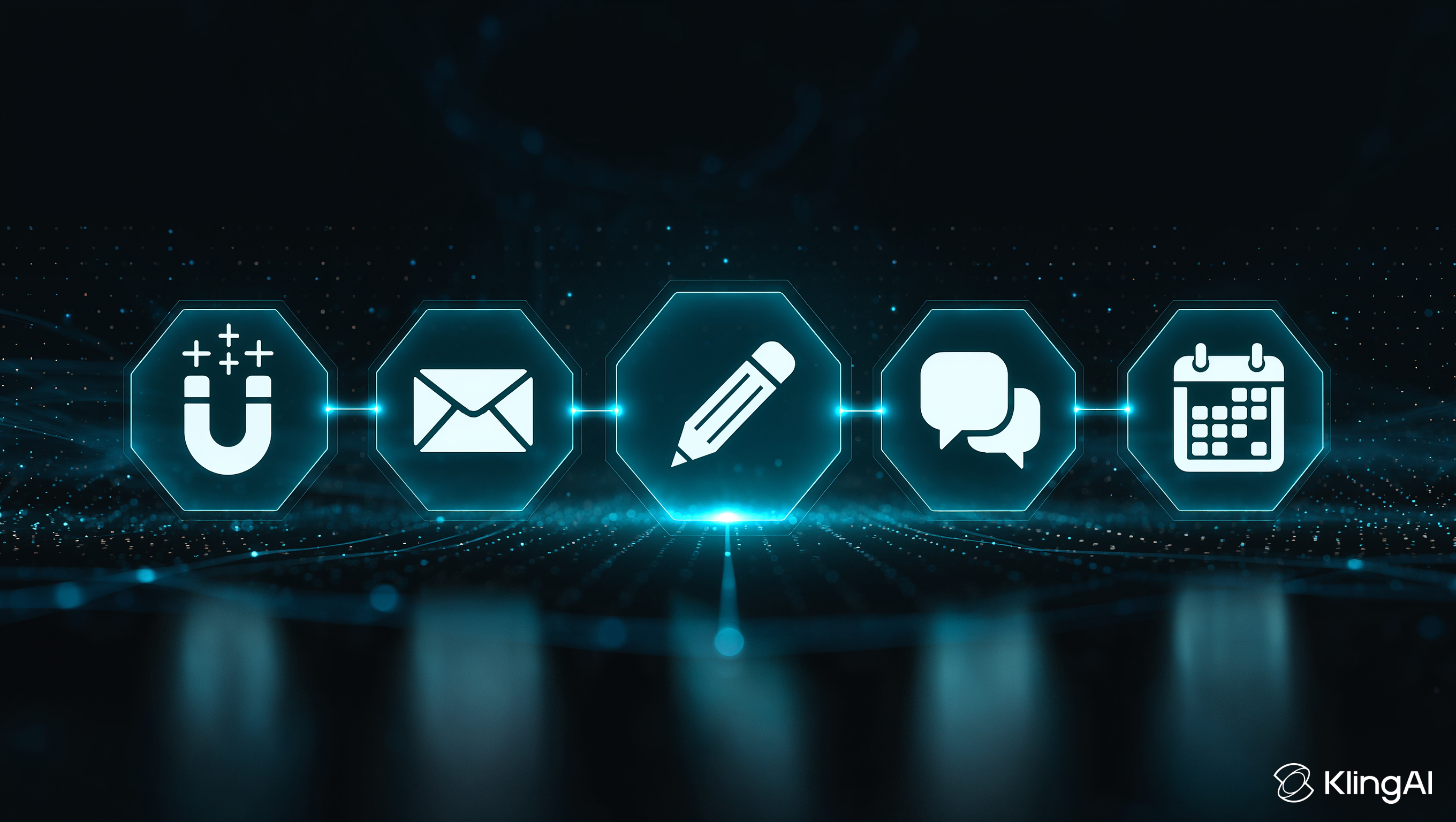
The 5 Areas Every Small Business Should Automate First
1. Lead Generation & Qualification
Most businesses rely on referrals and hope. AI lead generation systems actively find your ideal clients by scraping relevant directories, scoring each lead based on fit criteria, and delivering qualified prospects to your inbox daily.
What this looks like in practice: 100+ leads discovered, scored, and organized every single day. The best leads (your "Dream 100" companies) get priority outreach automatically.
2. Email Outreach & Follow-Up
The data is clear: 73% of follow-ups never get sent. Not because businesses don't care, but because humans forget, get busy, or don't have time. AI outreach systems run 7-step email sequences that go from providing free value to making a direct ask — all personalized to each recipient.
These sequences run at 8 AM every morning without anyone touching a button.
3. Content Creation & Distribution
Consistent content builds trust and attracts inbound leads. But posting every day on LinkedIn, Twitter, and Instagram while running a business? Practically impossible without help.
AI content engines generate, schedule, and publish content across all your platforms — 365 days a year. They repurpose one piece of content into multiple formats for different channels.
4. Client Communication & Chatbots
When a potential client visits your website at 11 PM and has a question, they don't want to wait until morning. An AI chatbot trained on your specific business can answer questions, qualify visitors, and book meetings — 24/7, instantly.
This isn't a generic FAQ bot. It's trained on your services, your pricing, your process, and your tone of voice.
5. Office Administration
Scheduling, email triage, data entry, invoice reminders, meeting notes — these tasks eat hours every week. AI office administration handles the back-office so your team focuses on revenue-generating activities.
How Much Time Can You Actually Save?
Based on data across our client portfolio:
- Lead generation: 5-8 hours/week saved (vs. manual prospecting)
- Email outreach: 3-5 hours/week saved (vs. writing and sending individually)
- Content creation: 4-6 hours/week saved (vs. creating and posting manually)
- Client communication: 2-3 hours/week saved (vs. answering repetitive questions)
- Admin tasks: 3-5 hours/week saved (vs. manual scheduling, data entry)
Total: 15-27 hours per week. That's 2-3 full working days recovered every single week.
What It Costs vs. What It Returns
AI automation systems typically cost between $2,999-$7,999/month depending on scope. Sounds like a lot until you do the math:
If your team's time is worth $50/hour (conservative), reducing manual workload = $4,000/month in recovered capacity. Add the revenue from leads you would have missed, and the ROI is typically 3-5x in the first 90 days.
Getting Started
The best first step is mapping your current time-wasters. Take our free 5-minute assessment — it identifies which automations will save you the most hours based on your specific industry and business stage.